Pheasant Flying on Reeds SVG
A Designer’s First Glance: Graceful, But Not Generic
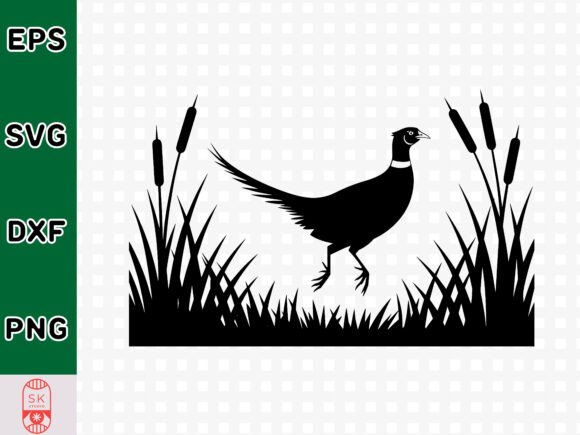
When I opened Pheasant Flying on Reeds SVG, I didn’t see just another wildlife motif—I saw movement, quiet confidence, and a subtle narrative. The pheasant’s wings are caught mid-beat, tail feathers fanning with intention, while the reeds bend slightly beneath its flight path. It’s not overly detailed like a botanical illustration, nor is it simplified to the point of abstraction. That balance makes it feel like an Illustrations piece built for translation—not just into print or digital mockups, but into real thread and fabric. For an embroidery designer, that’s the first green light.
Real Project Test: Embroidering a Linen Tote Bag for a Local Boutique
Last week, I used Pheasant Flying on Reeds SVG as the centerpiece for a limited-run linen tote bag—part of a small shop product line inspired by regional wetlands. I chose a medium-weight natural linen with a gentle weave, paired with matte cotton thread in deep olive and warm taupe. The design held up beautifully: the curve of the pheasant’s neck read clearly in satin stitch, the reeds translated well as layered fill stitches without overcrowding, and the negative space around the bird gave the composition room to breathe. Customers responded immediately—not just to the subject, but to how *intentional* it felt. That’s the difference between a decorative graphic and a considered embroidery file: it invites touch, slows the eye, and rewards close looking.
Where This Design Truly Shines
- Sweatshirt embroidery—its vertical flow works naturally across the chest or upper back, especially on relaxed-fit styles where the pheasant’s motion echoes the wearer’s posture.
- Embroidered patch—clean outer edges and moderate detail make it ideal for iron-on or sew-on patches on jackets, caps, or aprons.
- Baby embroidery—no sharp angles or micro-details, so it stitches reliably on soft cotton onesies or muslin blankets without snagging or puckering.
- Holiday embroidery—surprisingly versatile for autumn gifting or even quiet winter collections; think tea towels, pillow covers, or kitchen linens styled with dried grasses and ceramic mugs.
- Commercial embroidery—it scales well from 3” to 5.5”, maintains legibility at smaller sizes, and avoids dense stitch clusters that cause tension issues on production runs.
Where to Proceed Thoughtfully
Pheasant Flying on Reeds SVG isn’t magic—it’s a thoughtful Graphics asset that asks for context. On thin or highly stretchy fabric (like lightweight jersey), the reed stems can blur if stabilizer isn’t matched carefully to fabric weight. On dark fabric, avoid light thread unless you’re aiming for a delicate, almost ghosted effect—the design’s elegance depends partly on contrast clarity. And on curved surfaces like caps? Test the topmost reed tip and wingtip first: those points can distort if hooping isn’t precise or if the cap frame doesn’t fully support the design’s height.
What It Adds—Beyond Stitching
This isn’t just about whether the machine runs smoothly. Pheasant Flying on Reeds SVG elevates the handmade product by signaling care in curation. When customers see this on a personalized gift or boutique item, they sense craftsmanship—not because it’s flashy, but because it’s resolved. There’s no visual noise, no competing elements, no forced trendiness. That builds customer trust. For an Etsy seller or craft business, that translates directly to higher perceived value and better repeat engagement. It also plays well in branding: pair it with muted earth-tone packaging or simple typography, and your small shop product feels cohesive—not assembled.
Practical Notes Every Embroidery Designer Should Check
- Test on scrap fabric first—especially if using textured linen, terry cloth, or blended fabrics. Watch how the reed tips behave under tension.
- Review stitch density before scaling down below 3.5”. Some fill areas may need manual simplification for tiny hoop sizes.
- Confirm hoop size compatibility—the design’s height-to-width ratio leans vertical, so double-check your standard hoops (especially 4x4 or 5x7) before digitizing or purchasing.
- Inspect small details—not for complexity, but for isolation. The space between reed stems should remain open after stitching; if threads nest, adjust underlay or reduce density slightly.
- Try black-and-white mockups—this design relies on tonal contrast more than color, so grayscale previews reveal how well it’ll read on dark or busy backgrounds.
- Use proper stabilizer—a medium-weight tear-away works for most woven fabrics; switch to cut-away for knits or high-wear items like aprons or tote straps.
- Verify licensing—since it’s marketed for commercial use (“whether for…”), confirm whether resale of finished embroidered items or digital resale of modified versions is permitted before listing on Etsy or in wholesale catalogs.
Final Thought: A Quiet Anchor in a Noisy Marketplace
In a sea of overdesigned motifs and algorithm-chasing trends, Pheasant Flying on Reeds SVG stands out by doing less—and doing it well. It doesn’t shout. It settles. That makes it unusually flexible: equally at home on a baby’s organic cotton bib, a chef’s embroidered apron, or a holiday-themed kitchen towel sold at a local craft fair. As a designer who’s stitched hundreds of client projects, I keep returning to assets like this—not because they’re easy, but because they’re reliable. They let the maker shine, not the machine. And for anyone building a creative entrepreneur practice—whether through custom apparel, personalized gifts, or digital design assets—that reliability is worth more than novelty.