Mallard Duck Flying SVG Bundle
A Designer’s First Glance: Grace in Motion, Not Just a Silhouette
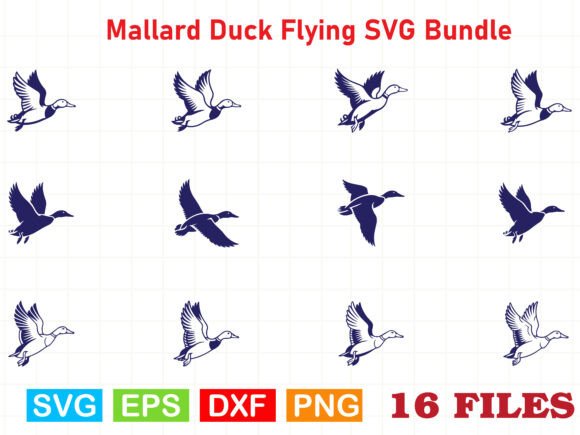
When I opened the Mallard Duck Flying SVG Bundle, what struck me wasn’t just the subject—it was the *intention*. This isn’t a stiff, static bird clipped from a stock library. The wings lift with subtle asymmetry, the tail feathers angle with believable aerodynamic tension, and the head turns just enough to suggest alertness—not aggression, not passivity, but quiet wildness. As an embroidery designer who’s stitched hundreds of animal motifs, I appreciate that this illustration leans into flow over fussiness. It reads clearly at 3–4 inches wide, holds character at 6 inches, and avoids microscopic details that would vanish under satin stitch or blur on textured fabric. That makes it instantly useful—not as a “pretty graphic,” but as a working embroidery file with built-in adaptability.
Real Project Test: Embroidering a Linen Tote for a Local Farm Shop
Last week, I used the Mallard Duck Flying SVG Bundle to create a limited-run embroidered tote for a small organic farm’s spring market booth. We chose natural unbleached linen—a fabric that shows every stitch decision. I resized the design to 4.2 inches tall, centered it on the front panel, and ran a test on scrap with medium-weight cutaway stabilizer. The result? Clean wing edges, smooth feather transitions in the fill stitch areas, and no thread nesting in the neck curve. Customers didn’t just notice it—they paused. One said, “It looks like it’s *about to land*.” That’s the difference between decoration and storytelling. This design carries mood without needing text, which matters when you’re stitching for boutique branding or personalized gifts where subtlety builds trust.
Where It Shines (and Where It Asks for Thought)
The Mallard Duck Flying SVG Bundle works beautifully for:
- Sweatshirt embroidery—its open negative space prevents bulk, and the wing shape drapes naturally over shoulder seams;
- Embroidered patches—clean outer lines mean crisp heat-applied or sew-on edges;
- Baby embroidery—gentle profile, no sharp points or aggressive angles; ideal for onesies or burp cloths;
- Kitchen towels and tea towels—the horizontal orientation fits standard towel hems, and the design scales well for both small accents and bold centerpieces;
- Holiday embroidery—especially for autumn-themed gifts or rustic wedding favors (think duck-embroidered napkins or linen sachets);
- Commercial embroidery for small shops—its versatility means one purchase supports mugs, apparel, and wall art without licensing friction (though always confirm terms before resale).
Use With Care: Practical Embroidery Designer Notes
This isn’t a “set-and-forget” embroidery file—and that’s a good thing. Its strength lies in thoughtful application, not automatic perfection. Here’s what I check every time:
- Test on scrap fabric first—especially with stretchy knits or dark fabrics where thread coverage matters more;
- Review stitch density—the body fill is generous but not overly dense; still, I reduce density by 5–8% on lightweight cottons to avoid stiffness;
- Confirm hoop size compatibility—the full design fits comfortably in a 5×7 hoop, but if you’re stitching caps or curved surfaces, isolate the head/wing tip and reposition;
- Inspect small details—the eye is minimal but legible; on thin fabrics, I sometimes simplify it to a single running stitch dot to prevent puckering;
- Check thread color contrast—muted olive greens and deep teals pop on cream or oatmeal linen, but avoid pale yellow thread on light fabric (loses definition);
- Use proper stabilizer—cutaway for knits, tear-away for stable wovens, and a light topping for textured fabrics like burlap or terry cloth;
- Test black-and-white mockups—this design relies on shape and silhouette, so if it reads clearly in grayscale, it’ll hold up across fabric types and lighting conditions;
- Verify commercial use rights—since the listing mentions “many other t” (likely truncated), double-check license scope before listing finished embroidered products on Etsy or bundling the SVG with your own digital embroidery files.
Fabric & Context Considerations You Can’t Skip
The Mallard Duck Flying SVG Bundle thrives on stable, medium-weight fabrics: canvas, denim, twill, midweight linen, and structured cotton blends. On thin fabrics like voile or rayon challis, I add a lightweight stabilizer *behind and on top*, then reduce stitch speed. For dark fabric, I recommend a matte thread (not glossy poly) to keep the duck’s natural sheen feeling authentic—not synthetic. And while it adapts well to curved surfaces like caps, avoid placing the full wing span across a seam line; instead, rotate slightly or use just the head + leading wing edge for better registration.
Why This Matters for Your Craft Business
As an Etsy seller and small shop owner myself, I know customers don’t buy “SVG files”—they buy confidence, cohesion, and charm. The Mallard Duck Flying SVG Bundle delivers that because it feels handmade *before* you stitch it. Its balanced proportions support strong printable mockups, its theme bridges outdoor, rustic, and modern aesthetics, and its clean vector foundation makes resizing for patches, labels, or packaging feel intuitive—not technical. When your customer sees that duck on a nursery pillow or holiday apron, they don’t see a download. They see intention. They see care. That’s what turns a custom apparel order into a repeat buyer, and a craft fair item into a word-of-mouth referral.
Final Thought: A Design That Earns Its Place
Not every illustration becomes an embroidery file that sings. The Mallard Duck Flying SVG Bundle does—because it respects the limits and language of thread, fabric, and human attention. It’s not flashy. It doesn’t shout. But in a world of oversaturated clipart, that quiet confidence is rare. Whether you’re stitching baby embroidery for a friend, building a collection of nature-themed design assets, or launching a line of embroidered kitchen goods, this is one of those rare Graphics that grows more valuable the more you use it—thoughtfully.