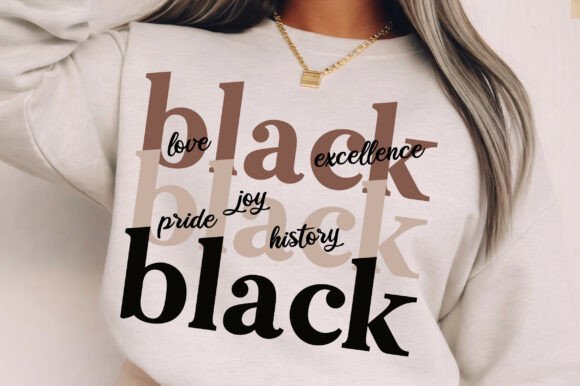
Black History SVG PNG
A Designer’s First Look: What This Design *Feels* Like Before the Needle Moves
Opening Black History SVG PNG for the first time, I didn’t reach for my embroidery machine—I paused. It’s not flashy or overly ornate, but it carries quiet weight. The composition reads clearly at a glance: balanced, centered, and respectful in its simplicity. There’s no cluttered ornamentation—just confident lines, intentional negative space, and a visual rhythm that suggests dignity, continuity, and pride. As a designer who’s stitched hundreds of custom pieces for boutiques and community events, I immediately saw its home: on a heavyweight cotton tote bag for a local Black History Month pop-up, or subtly embroidered on the chest of a unisex sweatshirt sold by an Etsy seller focused on meaningful, wearable storytelling.
Where It Shines—and Where It Needs Thoughtful Handling
This isn’t just a graphic—it’s a design asset with real-world behavior. In machine embroidery design terms, Black History SVG PNG translates well to stitch-based interpretation *if* treated with intention. I tested it as a custom apparel motif on midweight French terry—no puckering, clean satin stitch edges, and readable detail even at 3.5" wide. On baby onesies? Yes—but only with lightweight tear-away stabilizer and reduced density in fill areas. For embroidered patch applications, it holds up beautifully when backed with fusible web and finished with merrow edging.
That said, caution applies where precision matters most. Tiny lettering or fine interior linework—common in many T-Shirt Designs—can blur on stretchy fabric like jersey or thin knits without proper hooping and cutaway stabilizer. On dark fabric, contrast becomes critical: a light thread may read softly, while a metallic or high-sheen rayon could lift the design into something unexpectedly elegant—or distract from its message. And on curved surfaces like caps? Test placement early. The layout’s symmetry works best on flat or gently contoured zones—not the deep curve of a bill’s underside.
Real Project Moment: Stitching It Into Purpose
Last week, I used Black History SVG PNG to embroider ten linen tea towels for a small shop’s February collection. Not as a standalone logo—but paired with a single, hand-stitched “February” in running stitch beneath it. Customers responded not just to the image, but to how it *landed*: calm, grounded, unhurried. That tells me this design supports intentionality—not trend-chasing. It doesn’t scream. It affirms. That makes it ideal for personalized gift items (think: nursery decor, graduation throws, or wedding guest favors honoring heritage), where emotional resonance matters more than visual volume.
What It Adds to Your Finished Product
- Visual appeal: Clean lines ensure legibility across sizes—from 2" patches to 6" sweatshirt chest placements.
- Stitching clarity: Moderate detail avoids excessive jump stitches or dense underlay—reducing thread breaks and re-hooping.
- Product value: Feels considered, not generic—elevating handmade presentation for craft fairs or boutique shelves.
- Customer trust: Its respectful tone aligns with buyers seeking authenticity over appropriation—a quiet signal of care in your craft business.
- Brand consistency: Works equally well solo or layered with complementary motifs (e.g., subtle laurel wreaths, geometric borders) without competing.
Designer Notes You’ll Actually Use
Before loading Black History SVG PNG into your embroidery software:
- Test on scrap fabric first—especially if using textured weaves like canvas or terry cloth. Stitch density shifts dramatically across surfaces.
- Check thread color contrast on both light and dark mockups. A charcoal gray thread on navy feels rich; the same thread on ecru can disappear.
- Review stitch density. If your version includes fill areas, confirm they’re not overly dense for lightweight fabrics—over-stitching causes stiffness and cracking after washing.
- Confirm hoop size compatibility. Some versions of this design scale cleanly to 4×4 hoops; others push into 5×7 territory. Know which you’re working with.
- Inspect small details at 200% zoom in your editing software. Are corners sharp? Do letters separate cleanly? If not, minor digitizing tweaks may be needed.
- Test black-and-white mockups. This design relies on form, not color—so grayscale previews reveal clarity gaps faster than full-color renders.
- Use proper stabilizer: Cutaway for knits, tear-away for stable wovens, and lightweight fusible for delicate linens.
- Verify licensing. Since this is marketed as a digital embroidery file, confirm whether commercial use (e.g., selling finished embroidered patch products or Etsy seller listings) is permitted before production.
Who Should Reach For This—And Why
If you’re an apparel decorator building a culturally aware capsule collection, Black History SVG PNG offers substance without spectacle. For small shop product development, it’s versatile enough for seasonal launches (Juneteenth, Kwanzaa, Back-to-School) yet timeless enough for year-round offerings. Hobbyists appreciate its straightforward structure—no nested layers or hidden vector traps. And for digital product sellers, it’s a strong candidate for curated bundles focused on meaningful design assets, especially when paired with editable color palettes or companion applique elements.
It won’t suit every project—nor should it. But when matched thoughtfully to fabric, context, and audience, Black History SVG PNG does something rare: it honors legacy through craft, not cliché. That kind of integrity doesn’t get lost in the stitch count. It shows up—in the drape of a tote, the softness of a baby blanket, the quiet pride of a personalized gift. And that’s why, after years of reviewing embroidery file libraries, I keep this one in my active working folder.