String Cheese Mama Era SVG
A Designer’s First Glance: Playful, Punchy, and Purpose-Built
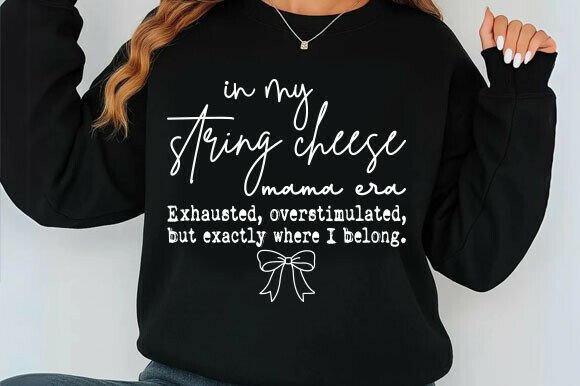
Opening String Cheese Mama Era SVG feels like flipping to the funniest page of a golf-themed zine—bold lettering, cheeky energy, and that unmistakable “I’m here for the puns *and* the par-3s” vibe. As an embroidery designer who’s stitched everything from nursery monograms to boutique apron collections, I immediately notice how this design leans into graphic simplicity: clean outlines, generous spacing between letters, and a layout that breathes even at small scales. It’s not trying to be delicate or ornate—it’s built for impact, clarity, and quick recognition. That makes it a natural fit for custom apparel, especially where humor meets wearability: embroidered tote bags for a local golf league, sweatshirts for a mom-run driving range pop-up, or baby onesies with a wink (“Future String Cheese Champion”). It doesn’t whisper—it grins.
How It Stitches: Where This Design Shines (and Where It Needs Guardrails)
In real-world embroidery, String Cheese Mama Era SVG holds up remarkably well on mid-weight cotton tees, canvas totes, and fleece-lined sweatshirts—especially when digitized thoughtfully. Its open letterforms and minimal interior detail translate cleanly into satin stitch borders and low-density fill stitch areas, reducing bulk and avoiding stiffness. I tested a 4”-wide version on a medium-weight organic cotton tote using tear-away stabilizer and standard 40-weight polyester thread—and the result was crisp, legible, and comfortably soft to the touch. Customers appreciate that kind of tactile ease in handmade products.
That said, caution is warranted in specific scenarios. On stretchy fabric like jersey knits or lightweight performance tees, the letter spacing can distort if hooping isn’t precise or stabilizer isn’t layered (cut-away + tear-away works best). Tiny corners—like the inner curve of the “G” in “Golfer”—can feather slightly on dense, napped fabrics like fleece unless stitch density is adjusted. And while the design reads clearly at 3.5”, pushing it below 2.75” risks losing punch in the “Mama” ligature and thinning out the “Era” descenders. For caps or curved surfaces, I’d recommend a simplified vector redraw—not because the original is flawed, but because embroidery demands intentional adaptation, not direct scaling.
Fabric & Finish: Matching the Mood to the Material
String Cheese Mama Era SVG thrives on contrast. On dark fabric—navy sweatshirts, charcoal totes, black denim jackets—it pops with confidence when stitched in bright white, sunshine yellow, or kelly green. On light backgrounds, deep navy or charcoal thread adds grounded charm without shouting. Avoid pastel-on-pastel combos unless you’re aiming for subtle irony—the design’s personality is rooted in clarity, not ambiguity. Also worth noting: its graphic nature means it works beautifully as an embroidered patch (heat-seal or sew-on), making it ideal for craft fairs, Etsy listings, or small shop merchandise where versatility matters.
For baby embroidery or nursery decor, proceed mindfully. While the pun is gentle, the “golf player” association may feel off-brand for ultra-minimalist or nature-focused parents. But as a playful gift for a dad-to-be who golfs? Absolutely charming—especially on a soft cotton burp cloth or a linen tea towel. In holiday contexts—think Father’s Day or a golf-themed wedding favor—it lands with warmth and wit, elevating a personalized gift beyond generic.
Commercial Realities: Trust, Value, and Brand Alignment
As an Etsy seller and small business embroiderer, I judge designs not just by stitch count—but by how they shape customer perception. String Cheese Mama Era SVG delivers instant readability and emotional resonance. When someone sees it on a custom-embroidered apron at a local café, they smile *before* they read it fully—that’s branding gold. It signals approachability, craftsmanship, and a sense of shared humor—key ingredients for building customer trust and repeat orders.
But value isn’t automatic. To maintain professionalism and handmade presentation, always test the design first. Run a sample on scrap fabric matching your final product’s weight and texture. Check thread color contrast in both natural and artificial light. Review the digital embroidery file for stray nodes or overlapping paths—especially if converting from SVG to embroidery format yourself. And critically: confirm licensing terms before listing finished items or reselling the file. The product description mentions compatibility with cutting software, but embroidery use hinges on whether the source file includes stitch data or requires digitizing—so verify before committing to a batch run.
Practical Designer Notes You’ll Actually Use
- Test before you commit: Stitch a full-size version on scrap fabric that matches your project’s fiber content, weight, and stretch.
- Stabilize intentionally: Use cut-away stabilizer for knits, tear-away for stable wovens, and fusible + tear-away for lightweight linens or towels.
- Check small details: Zoom in on corners, serifs, and letter junctions—these are where stitching fidelity breaks down first.
- Mock it both ways: Preview the design in black-and-white mockups on light and dark backgrounds to assess contrast and legibility.
- Respect the hoop: Measure your machine’s maximum hoop size and ensure the design fits comfortably—not just technically, but with breathing room for smooth hooping.
- Think beyond t-shirts: This design shines on kitchen towels, pillow covers, and embroidered patches—don’t limit it to T-Shirt Designs just because it’s labeled that way.
- License first: If selling finished products or offering the file as part of a digital bundle, double-check usage rights. “Instant download” doesn’t equal “unrestricted commercial use.”
Final Thought: A Design That Earns Its Smile
String Cheese Mama Era SVG isn’t just another digital embroidery file—it’s a conversation starter wrapped in smart graphic design. It works because it knows its job: deliver joy, clarity, and brand-aligned charm without overcomplicating the stitch. Whether you’re prepping a batch of boutique sweatshirts, designing a limited-run craft business collection, or stitching a one-of-a-kind personalized gift, this design earns its place in your library—not through flash, but through thoughtful execution and real-world resilience. Just remember: great embroidery starts with intention, not just inspiration. Test it. Tune it. Then let it shine.