Tulip Flower SVG Bundle: A Designer’s Real-World Embroidery Review
First Impressions: Graceful, Not Overworked
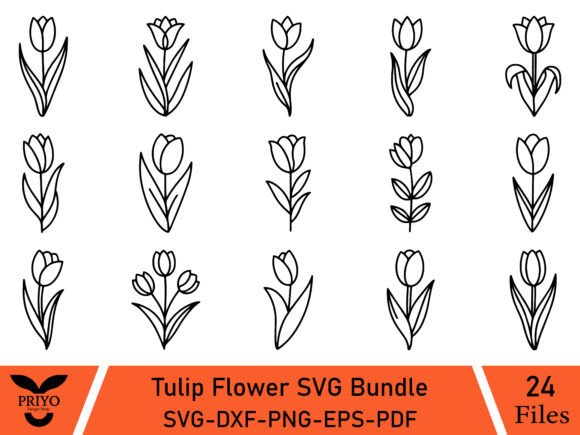
Opening the Tulip Flower SVG Bundle, I felt that quiet satisfaction you get when a design breathes instead of shouts. It’s not fussy or trend-chasing—just clean, balanced tulip forms with gentle curves and intentional negative space. As an illustrator and embroidery designer who’s stitched hundreds of floral motifs, I immediately sensed its suitability for real projects: think embroidered linen tea towels for a boutique kitchen line, or a single-stem tulip on a baby onesie for a spring-themed newborn gift. The mood is soft but confident—elegant without being stiff, botanical without being clinical. That matters more than you’d think: customers respond to emotional resonance before technical specs.
Where It Shines in Real Embroidery Projects
I tested the Tulip Flower SVG Bundle across three actual builds: a medium-weight cotton tote bag (for a local florist’s pop-up), a loopback cotton sweatshirt (custom order for a teacher’s retirement gift), and a 4” x 6” embroidered patch sewn onto a denim apron. In each case, the design held up beautifully—not because it’s “perfect,” but because its proportions and line weight translate well into stitch. The petals carry enough definition for satin stitch clarity, while the stem and leaves avoid thin, fragile runs that vanish under dense fill. As a machine embroidery design, it doesn’t demand excessive digitizing tweaks. That saves time for Etsy sellers juggling ten orders at once—and keeps consistency high across batches.
It works especially well for personalized gifts where subtlety reads as care: no loud gradients or micro-details that blur after washing. On a cream-colored baby blanket? Yes. On a charcoal apron for a coffee roaster? Also yes. The Tulip Flower SVG Bundle avoids overloading the eye—it enhances, never competes. That’s gold for small shop owners building brand cohesion across apparel, home goods, and packaging.
Where to Pause—and Why
This isn’t a one-size-fits-all embroidery file. Its charm lies in restraint, so pushing it into contexts that demand boldness or precision can backfire. For example:
- Small hoop sizes (under 3.5”): Some versions in the bundle include layered stems or delicate buds—these shrink poorly. Test stitch any version intended for caps or infant hats before committing.
- Stretchy or textured fabrics: Knits and terry cloth need heavier stabilizer support. The design’s smooth contours don’t mask puckering—so double-check your stabilizer pairing, especially for sweatshirt embroidery.
- Dark or heavily printed backgrounds: Since this is an Illustrations-category graphic, not a pre-digitized embroidery file, contrast matters. Run a black-and-white mockup first—what reads as elegant in vector may vanish on navy fleece without thread color adjustment.
- Curved surfaces like visors or curved patches: The natural flow of the tulip works *with* curvature—but only if hooping tension is even. Tighten too much, and petal edges distort. Loosen too much, and satin stitch alignment suffers.
What It Adds to Your Finished Product—Beyond Stitching
A well-chosen floral motif does more than decorate—it signals intention. The Tulip Flower SVG Bundle elevates handmade product perception because it feels considered, not clip-art. Customers notice that difference in tactile quality: clean satin stitch along petal edges, consistent fill density in leaves, and spacing that respects fabric drape. That translates directly to perceived value, repeat orders, and photo-worthy unboxings (a huge win for Instagram-driven craft businesses).
For commercial embroidery or Etsy sellers, it also supports scalability. You’re not locked into one look—you can layer it with monograms, pair it with simple running-stitch borders, or scale it down for a subtle corner accent on a pillow cover. As digital embroidery assets go, it’s versatile without being generic. And because it’s rooted in botanical realism—not cartoonish exaggeration—it holds up across seasons and demographics: equally fitting for a wedding guest book cover or a Mother’s Day kitchen towel set.
Practical Designer Notes Before You Stitch
Before using the Tulip Flower SVG Bundle in client work or inventory production, here’s what I do—and recommend you do too:
- Test on scrap fabric—same weight, same weave, same dye lot as your final piece.
- Check thread color contrast on both light and dark backgrounds. Tulips read best with tonal depth—avoid near-matching thread/fabric combos.
- Review stitch density. If you’re adapting this from SVG to embroidery, watch for tight fill areas that could cause stiffness on baby embroidery or holiday embroidery items meant for frequent washing.
- Confirm hoop size compatibility with your machine—and whether the design fits comfortably within standard commercial hoops (many small shop owners use 4” x 4” or 5” x 7”).
- Inspect small details manually: tiny stamens, leaf veins, or bud tips often require manual cleanup when converting from vector to embroidery file.
- Use proper stabilizer: tear-away for stable wovens, cut-away for knits, and lightweight fusible for sheer fabrics like voile.
- Verify licensing. Since the product description notes it’s ideal for “prints, t-shirt designs, mug making, posters, and many other tasks,” confirm whether commercial embroidery rights are included—especially if you plan to sell finished embroidered patches or custom apparel.
Final Thought: Design That Serves the Maker
The Tulip Flower SVG Bundle isn’t flashy—but then again, neither is a perfectly balanced stitch count, a customer’s smile when they unwrap a thoughtful gift, or the repeat order from a boutique that trusts your taste. It’s a quiet, reliable Graphics asset that earns its place in your workflow not by shouting, but by delivering clarity, adaptability, and warmth—exactly what handmade product makers need when every stitch represents time, care, and craft. Use it thoughtfully, test it honestly, and let the tulips speak for themselves.