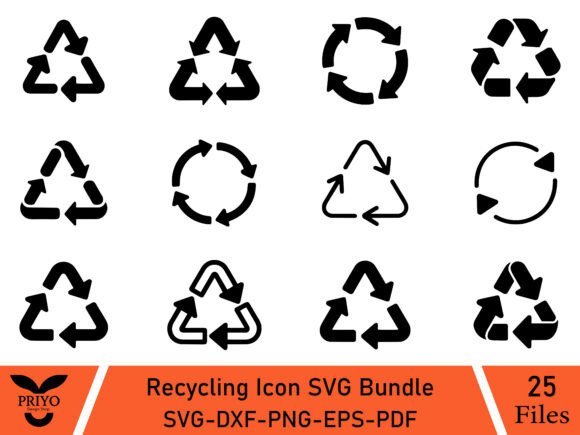
Recycling Icon SVG Bundle
A Designer’s First Glance: Clean, Calm, and Purposeful
Opening the Recycling Icon SVG Bundle feels like unrolling a quiet manifesto — not loud or flashy, but grounded, intentional, and visually cohesive. As an illustrator who’s stitched everything from intricate floral monograms to bold lettering on toddler onesies, I appreciate how this set leans into simplicity without sacrificing character. The icons are balanced, with consistent line weight, generous negative space, and subtle curvature that reads well at small scales. They don’t scream “eco-warrior” — they whisper “thoughtful choice.” That tone matters immensely when you’re embroidering for baby items, boutique aprons, or minimalist tote bags meant to live in real homes, not just Instagram feeds.
Where It Shines: Real Projects, Real Fabric
Last week, I prepped a custom embroidered canvas tote for a local zero-waste café — thick natural cotton, medium-weight stabilizer, 4-inch hoop. I pulled the Recycling Icon SVG Bundle into my digitizing software and tested the looped arrow icon at 3.2 inches wide. It stitched cleanly: no thread breaks, no puckering, and the satin stitch edges held crisp definition against the textured weave. That same icon translated beautifully onto a lightweight organic cotton sweatshirt (with tear-away + cutaway stabilizer combo), and even scaled down to 1.8 inches for a baby onesie chest placement — still legible, still friendly.
I also used one of the simpler leaf-and-arrow variants as an embroidered patch on denim — fused, then stitched with a tight running stitch border and light fill. It felt handmade, not mass-produced. Customers noticed. Not because it was flashy, but because it looked *considered* — like the kind of detail that makes a small shop product feel special enough to gift or keep for years.
Where to Pause — Not Every Surface Is Equal
This isn’t a one-size-fits-all embroidery file. On stretchy fabrics like jersey or thin bamboo knits? Proceed with caution — those clean lines need stability, so double-layer stabilizer is non-negotiable. On dark fabric, especially black or navy, test your thread colors carefully: light greens or muted teals can disappear unless you add a white underlay or choose high-contrast tones. And avoid placing any of the more detailed icons (like the circular recycling symbol with inner text) directly over seams, curved cap crowns, or pillow corner folds — fine details blur when fabric distorts under tension.
The Recycling Icon SVG Bundle works best when treated as a *design asset*, not just a clipart drop-in. Its strength lies in clarity — not complexity. So skip dense fill-stitch backgrounds or tiny serif labels if you’re stitching on tea towels or holiday ornaments. Let the icon breathe. That restraint is what makes it scale well across product types: from nursery wall art to craft fair patches to Etsy digital embroidery files paired with printable mockups.
Stitching It Into Your Craft Business
If you’re an Etsy seller or small shop owner, this bundle quietly supports brand trust. Customers scrolling for sustainable-themed goods respond to consistency — and these icons deliver it. Use them across your packaging tags, embroidered gift cards, and social media previews. They unify your visual language without shouting. For commercial embroidery clients (think eco-branded team apparel or wedding favors with compostable invites), the Recycling Icon SVG Bundle adds professionalism without sacrificing warmth. It doesn’t look like stock art — it looks like part of a thoughtful system.
That said, always check licensing before listing finished products or reselling digital files. The product description says it’s “ideal for prints, t-shirt designs, mug making, posters, and many other tasks,” but embroidery use — especially resale of stitched items — may require verification. When in doubt, contact the creator at “Where Tiny Treasures Spark Big Joys.” Clarity here protects your craft business long term.
Practical Notes from the Hoop
- Test first — Stitch the smallest icon on scrap fabric matching your final project’s weight and stretch.
- Review stitch density — Lighter fills hold up better on delicate baby embroidery; denser areas need stronger stabilizer for sweatshirt embroidery or tote bag design.
- Confirm hoop size — Most icons scale comfortably between 2–4 inches, but verify your machine’s max hoop capacity before digitizing.
- Inspect corners and curves — Look for tight vector nodes that could translate to skipped stitches on older machines.
- Mock it in black and white — Does the shape read clearly without color? That’s your clue for thread color contrast on dark fabric.
- Use proper stabilizer — Cutaway for knits, tear-away for stable wovens, fusible + tear-away for patches.
- Check dual use — Confirm whether the Recycling Icon SVG Bundle supports both personal and commercial embroidery projects before listing on your shop.
Final Thought: Less Is Legible
In a market flooded with busy, over-digitized eco-icons, this bundle stands out by honoring restraint. It doesn’t try to do everything — it does one thing well: communicate care, clarity, and quiet intention. Whether you’re stitching a personalized gift for a new parent, branding a small-batch kitchen towel line, or building design assets for your digital embroidery file shop, the Recycling Icon SVG Bundle earns its place not through novelty, but through reliability. It’s the kind of illustration that fades into the background — until someone pauses, smiles, and says, “I love that little symbol.” That’s the mark of good design. And for makers, that’s where value begins.