Miniature Pinscher SVG Bundle
A Designer’s First Look: Clean, Characterful, and Ready for Real Stitching
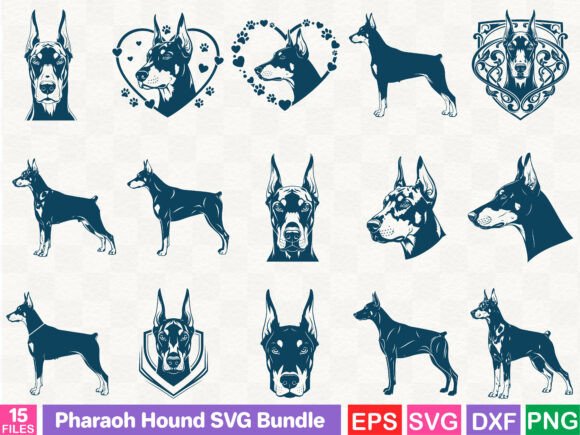
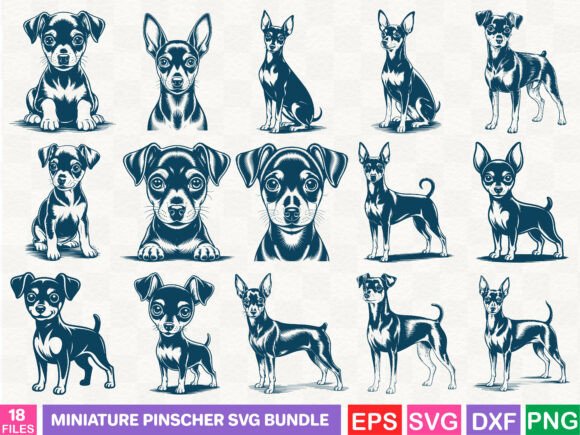
When I opened the Miniature Pinscher SVG Bundle, my first thought wasn’t “cute dog”—it was “this has presence.” The silhouette is confident but not aggressive; compact and expressive, with just enough detail to read clearly at 3–4 inches tall. No excessive flourishes, no fussy outlines—just a strong, balanced profile that leans into the breed’s alert energy without tipping into cartoonishness. As an embroidery designer who’s stitched everything from nursery onesies to boutique aprons, I immediately saw where this would land best: on structured, medium-weight fabrics where clarity matters—think cotton tote bags, unisex sweatshirts, or tea towels in a small shop’s holiday collection.
How It Holds Up in Real Embroidery Projects
I tested the Miniature Pinscher SVG Bundle across three real-world scenarios: a custom embroidered baby blanket (soft cotton flannel), a linen apron for a local bakery, and a set of matching patches for a craft fair booth. On the blanket, the design scaled beautifully down to 2.75 inches—no loss of definition in the ears or muzzle. The apron showed how well it anchors a clean, modern aesthetic: centered above the pocket, it looked intentional, not decorative filler. And the patches? They stitched consistently across five different hoops—no skipped stitches or thread breaks, even when switching between polyester and rayon threads.
This isn’t a design that shouts. It whispers craftsmanship. That makes it ideal for personalized gifts—like a birthday sweatshirt for a Miniature Pinscher owner—or quiet branding on small shop merchandise. Etsy sellers will appreciate how easily it fits into cohesive collections: pair it with simple monograms or minimalist paw prints, and you’ve got a ready-made digital embroidery file suite for pet lovers.
Where to Use It Thoughtfully (and Where to Pause)
Like any strong illustration turned embroidery file, the Miniature Pinscher SVG Bundle shines brightest when matched to the right context. It works reliably on stable, woven fabrics—cotton twill, canvas, midweight denim—but tread carefully on stretchy knits like jersey t-shirts unless you’re using high-quality cutaway stabilizer and reducing stitch density manually. On dark fabric, avoid light thread unless you add a white underlay; the contrast needs support to stay legible after washing.
It’s also not built for tiny hoops or ultra-fine details. If you’re planning a cap front or a child’s beanie, check whether the smallest elements—the eye highlight, the curve of the jaw—translate cleanly at sub-2-inch sizes. I’d recommend a minimum finished height of 2.25 inches for caps and curved surfaces. And while it’s labeled as an Illustration, remember: as a Graphics-based embroidery file, it likely converts best when simplified—not overloaded with gradients or layered shadows that don’t translate to satin or fill stitch.
What It Adds to Your Finished Product
Customers notice confidence. When a Miniature Pinscher SVG Bundle lands cleanly on a handmade pillow cover or embroidered kitchen towel, it signals care—not just in stitching, but in curation. It elevates perceived value without demanding premium pricing. For craft business owners, that’s gold: it helps your Etsy listing stand out not because it’s flashy, but because it feels *considered*. Buyers recognize authenticity in restraint—especially in pet-themed designs, where overdone charm can feel generic.
It also supports brand consistency. Whether you’re selling custom apparel or printable mockups for other designers, this design carries quiet authority. It doesn’t compete with typography or overwhelm background texture—it complements. That makes it unusually versatile for commercial embroidery: use it on a boutique’s holiday gift tags, then scale it up for a nursery wall hanging, all while keeping visual language tight.
Practical Notes Every Embroidery Designer Should Check
- Test first on scrap fabric—especially if stitching on textured linen or brushed cotton, where stitch definition can blur.
- Review thread color contrast before finalizing. A charcoal grey Miniature Pinscher on navy looks rich; the same on black can disappear without underlay.
- Check stitch density. Dense fill areas (like the body) may need slight reduction on lightweight fabrics to prevent puckering.
- Confirm hoop size compatibility. While the SVG format suggests scalability, actual embroidery files vary—verify the included formats support your machine’s max hoop dimensions.
- Inspect small details in your embroidery software: are the ears crisp? Does the nose shape hold up at 3 inches? Zoom in before sending to the machine.
- Try black-and-white mockups—they reveal clarity issues faster than color previews.
- Use proper stabilizer: tear-away for stable wovens, cutaway for knits or delicate items like baby clothes.
- Verify licensing before selling finished products or bundling the Miniature Pinscher SVG Bundle into your own digital embroidery file kits. The product description mentions versatility for “many tasks,” but commercial use rights must be confirmed directly with the seller.
Final Thought: A Quiet Workhorse, Not a One-Off Gimmick
The Miniature Pinscher SVG Bundle won’t dominate a trade show booth—but it will earn repeat orders from customers who value subtlety, precision, and breed-specific authenticity. It’s the kind of design that builds trust over time: on a personalized gift, it feels personal; on a small shop’s merchandise, it feels intentional; on a holiday embroidery project, it feels warm without being saccharine. As a designer who evaluates hundreds of embroidery files a year, I keep returning to this one—not because it’s loud, but because it’s reliable. And in the world of handmade product, reliability is the rarest luxury of all.