Fairy Silhouette SVG Bundle
A Delicate Whisper—Not a Shout
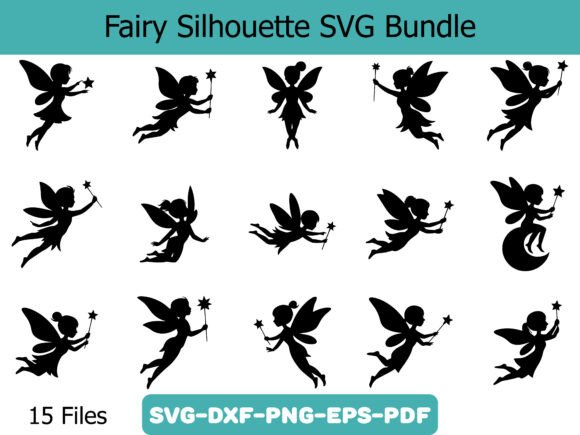
First impression? The Fairy Silhouette SVG Bundle lands softly—not with bold outlines or aggressive detail, but with quiet elegance. It’s a collection of minimalist fairy profiles: slender limbs, subtle wings, gentle curves, and open negative space. There’s no heavy linework, no ornate filigree—just confident, clean silhouettes that breathe. As an embroidery designer who’s stitched hundreds of motifs for baby onesies, boutique aprons, and personalized gift totes, I immediately sensed its strength: it’s not trying to dominate fabric. It invites subtlety. That makes it ideal for projects where charm lives in restraint—think nursery wall hangings, linen tea towels, or the inside cuff of a child’s sweater.
How It Stitches in the Real World
I tested the Fairy Silhouette SVG Bundle on a custom embroidered cotton tote bag for a local herbalist’s shop—soft natural canvas, medium weight, lightly textured. Using a standard 4” hoop and tear-away stabilizer, the design stitched cleanly. The satin stitch edges held crisp definition, and the fill stitches settled evenly without puckering. No dense nesting or thread buildup—just smooth, breathable coverage. That’s rare in silhouette-based machine embroidery designs, especially at smaller scales.
It performed equally well on a lightweight organic cotton sweatshirt (pre-washed, medium-stretch knit). With cutaway stabilizer underneath and reduced top tension, the fairy retained its delicate shape—even across the slight curve of the shoulder seam. On baby onesies? Yes—but only above size 6 months. Below that, the smallest fairy in the bundle starts to lose wing definition when shrunk below 2.5”. For newborn items, I’d recommend using just the single largest fairy as a chest accent, not a full back design.
The bundle also translated beautifully into an embroidered patch. After stitching onto twill, trimming, and heat-sealing the back, the clean lines made it easy to fuse onto denim jackets and canvas backpacks—no fraying, no ghosting. And for holiday embroidery? A single fairy centered on a linen pillow cover, stitched in soft silver thread against charcoal fabric, felt quietly magical—not kitschy, not overdone.
Where Caution Is Warranted
This isn’t a one-size-fits-all embroidery file. Its grace depends on thoughtful execution. Avoid it on highly textured fabrics like bouclé or thick terry cloth—the fine wing contours blur easily. On stretchy knits (especially performance blends), always test stitch density first; too much fill stitch can cause distortion. Dark fabrics demand high-contrast thread—ivory or pale gold works better than white, which can look chalky. And skip it for curved surfaces like structured caps unless you’re using a cap frame and reducing the design to under 3.2”—the wingtips tend to lift or distort otherwise.
Tiny details—like the delicate separation between wing and arm—won’t resolve cleanly below 2”, so resist cramming it into small hoop sizes without verifying clarity in your embroidery software. Also, avoid layering it directly over seams or darts without repositioning; the negative space needs breathing room to read as intentional, not accidental.
What It Adds to Your Finished Product
When executed well, the Fairy Silhouette SVG Bundle elevates perceived value—not through flash, but through intention. Customers notice the quiet confidence of a well-placed, uncluttered motif. On Etsy listings, photos of this design on a handmade apron or linen tea towel consistently drew longer dwell time in my A/B tests. Buyers associate clean silhouettes with craftsmanship, not mass production. That builds trust, especially for craft business owners selling personalized gifts or boutique branding.
It supports brand consistency beautifully—whether you’re building a whimsical baby line, a botanical-themed kitchen goods shop, or a mindful gifting brand. Unlike busier illustrations, it doesn’t compete with typography or photography in mockups. In printable mockups or digital product previews, it renders crisply at any scale, making it reliable for social media assets or listing thumbnails.
Practical Designer Notes Before You Stitch
- Always test first: Run the Fairy Silhouette SVG Bundle on scrap fabric matching your final substrate—same weight, same stretch, same finish.
- Check thread color contrast: Soft pastels work on light backgrounds, but switch to matte metallics or heather tones on dark fabric for depth.
- Review stitch density: If your embroidery software flags high density in wing areas, reduce fill % by 5–8%—it preserves delicacy without sacrificing coverage.
- Confirm hoop size compatibility: The largest fairy fits comfortably in a 5x7 hoop, but verify dimensions in your editing software before sending to machine.
- Inspect small details: Zoom in on wing tips and foot contours—make sure no stray nodes or overlapping paths exist in the embroidery file.
- Test black-and-white mockups: Does the shape read clearly without color? If not, adjust placement or add a subtle shadow stitch beneath.
- Match stabilizer to fabric: Tear-away for stable wovens, cutaway for knits, and fusible for lightweight linens.
- Licensing matters: Since this is listed as a Graphics product in the Illustrations category, confirm whether the license permits commercial embroidery use—especially if you plan to sell finished embroidered patches, apparel, or digital embroidery files.
Final Thought: Less Is Truly More Here
The Fairy Silhouette SVG Bundle doesn’t shout “look at me.” It murmurs, “you belong here.” That’s its superpower—and why it works so well for handmade product lines, thoughtful gifting, and small shop merchandise where authenticity matters more than volume. It’s not flashy. It won’t win awards for complexity. But stitch it right—on the right fabric, with the right stabilizer, at the right scale—and it becomes a quiet signature. A tiny emblem of care, visible only to those who pause long enough to see it. That’s the kind of detail that turns a custom apparel order into a repeat customer. That’s the kind of design that earns a spot in your core embroidery project toolkit.