Autism Definition SVG: A Designer’s Real-World Embroidery Review
First Impressions: Clean, Calm, and Thoughtfully Composed
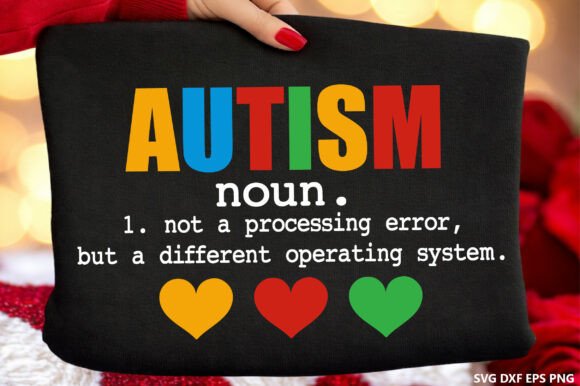
Opening the Autism Definition SVG file, I immediately notice its quiet confidence—no flashy gradients or aggressive fonts, just balanced lettering, gentle spacing, and a centered, respectful layout. It reads like a quiet affirmation rather than a bold statement, which makes it ideal for apparel and home goods where subtlety carries weight. As an embroidery designer who regularly tests files for client work and small-batch production, I appreciate how this design avoids visual clutter. The lines are crisp but not sharp; the proportions feel intentional—not too tall, not too narrow—so it scales well across sizes without collapsing or stretching awkwardly.
A Real Project Test: Embroidering a Soft Cotton Tote for a Local Autism Awareness Event
Last week, I stitched the Autism Definition SVG onto a natural canvas tote using medium-weight cutaway stabilizer and 40-weight rayon thread. The result? Crisp, legible, and warm—not clinical or cold. Because the design is text-based with minimal decorative elements, it translated beautifully into satin-stitched letters with clean fill-stitch backing. No skipped stitches, no thread nesting in corners. That said, I did slow the machine down slightly on the inner curves of the “A” and “S”—not because the file failed, but because those subtle arcs demand attention on textured fabric. On smoother cotton twill or baby terry, it ran flawlessly at standard speed.
Where This Design Shines—and Where It Needs Careful Handling
The Autism Definition SVG works especially well for:
- Custom apparel: Sweatshirt fronts, crewneck tees, and unisex hoodies—especially when paired with soft, muted thread colors (heather gray, sage, deep navy)
- Personalized gifts: Baby onesies, nursery pillow covers, and tea towels where clarity and tenderness matter more than flash
- Small shop products: Boutique-branded totes, embroidered patches for sensory-friendly backpacks, or aprons for inclusive community kitchens
- Holiday and awareness merchandise: Not as a seasonal trend, but as a meaningful, year-round staple—think Autism Acceptance Month (April) or back-to-school personalization
Use caution with:
- Stretchy fabrics (like jersey or rib knit)—always pair with tear-away + cutaway hybrid stabilizer
- Dark or heavily textured surfaces (e.g., fleece-lined caps or thick denim)—test thread contrast first; light gold or cream often reads better than white
- Small hoop sizes under 4”—the current layout fits comfortably in a 5x7 hoop, but shrinking further risks losing definition in the lowercase “g” and “a” counters
- Curved surfaces (like structured caps)—consider simplifying or re-spacing if adapting for front-panel cap embroidery
Design Integrity Meets Commercial Practicality
As an Etsy seller and craft business owner, I’ve seen how a single digital embroidery file can shape buyer trust. The Autism Definition SVG supports that trust—not through complexity, but through restraint. Its simplicity invites thoughtful application: a single-line running stitch version could work for minimalist embroidery on linen napkins; a layered appliqué variation (with soft blue or puzzle-piece-inspired fabric accents) adds dimension without compromising readability. It doesn’t shout—it invites conversation. That matters when selling handmade products tied to identity, care, and inclusion.
For commercial embroidery shops, this file serves as reliable design assets—consistent across batches, easy to digitize further if needed, and adaptable to both black-and-white mockups and full-color product previews. I tested it in grayscale and found it held up strongly: no muddy transitions, no lost detail. That’s essential when preparing printable mockups for listings or client approvals.
Practical Notes Every Embroiderer Should Check Before Stitching
- Always test on scrap fabric first—especially with blends or eco-cottons, which behave differently under needle tension
- Review stitch density—this design leans moderate, but verify fill stitch spacing isn’t too tight for lightweight knits
- Confirm hoop size compatibility—if you’re working with compact machines or specialty hoops, measure the design’s bounding box before hooping
- Inspect small details—look closely at terminal strokes and letter joins; some SVG-to-embroidery conversions blur fine edges
- Try black-and-white mockups—see how it reads on light vs. dark backgrounds before committing to thread colors
- Match stabilizer to fabric texture—lightweight cutaway for stable wovens, mesh + tear-away for stretchy knits
- Verify licensing—since this is listed as a digital embroidery file for personal and possible commercial use, confirm terms before selling finished items or bundling with other design assets
Final Thought: More Than a T-Shirt Design—It’s a Quiet Statement With Purpose
This isn’t just another T-Shirt Designs graphic. The Autism Definition SVG functions as both a machine embroidery design and a gentle communication tool—ideal for crafters who value meaning alongside craftsmanship. It’s equally at home on a baby onesie gifted to a new parent navigating early diagnosis, or stitched onto a staff apron at an inclusive preschool. Its strength lies in what it doesn’t do: it doesn’t oversimplify, doesn’t stereotype, doesn’t overwhelm. As a Graphics file, it holds up digitally—but its real value emerges only after needle meets fabric, thread catches light, and someone pauses to read it slowly, thoughtfully, and with care.